
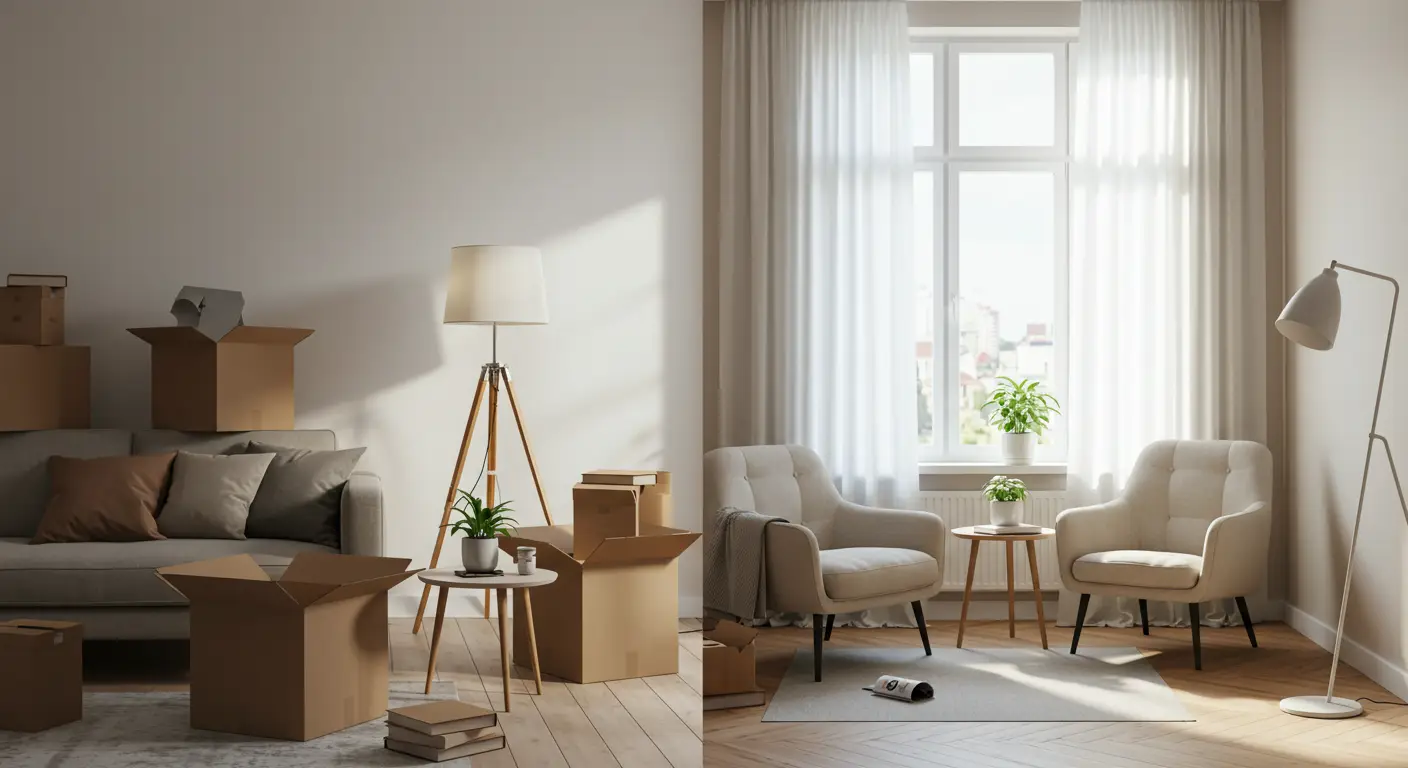
The Shopping Cart Trap
Three weeks after moving into her new Chatswood apartment, Janet was already on a first-name basis with her courier driver. Packages from IKEA, West Elm, and Amazon piled up in the hallway. At midnight, she found herself scrolling for “the lamp that will fix everything.”
Yet despite denting her credit card, the space still felt wrong.
“I kept thinking the next purchase would solve it,” she said. “But throwing furniture at the problem wasn’t working.”
Janet had fallen into the most common post-move mistake: trying to buy her way to comfort, when what the space really needed was understanding.
Why Furniture Isn’t the Fix
Environmental psychology shows that satisfaction with a home comes less from what we buy, and more from how the fundamentals align with our senses:
- Clutter and visual load. Our brains process every single object in sight. Too much visual noise can spike stress and fatigue. New furniture doesn’t solve this — it often adds to it.
- Light and mood. Natural light patterns influence circadian rhythms and energy. A “perfect” sofa won’t compensate for a room that never sees the sun.
- Air and comfort. Ventilation directly affects cognition and wellbeing. A designer rug won’t disguise stale, stagnant air.
- Flow and ease. Spaces that force awkward detours or bottlenecks wear us down daily. A stylish sideboard can actually make this worse.
The point isn’t that furniture is irrelevant — it’s that without attending to these deeper cues, even the most expensive purchases sit awkwardly, like costumes on the wrong stage.
Inspection Day Lessons
Before you even think about decorating, learn the rhythms of your new environment:
- Light: Watch how daylight moves through the rooms for at least a week. Where does the morning sun lift mood, and where does gloom linger?
- Air: Open windows, notice cross-breezes, sniff for dampness or stale odours. Airflow shapes comfort more than scatter cushions ever could.
- Sound: Spend two quiet minutes in each room. Can you hear traffic, neighbours, or plumbing? This helps decide which rooms should be for sleeping, working, or retreating.
- Movement: Walk your daily patterns — bedroom to bathroom, kitchen to living. Where does the body naturally want to go? Where feels blocked or awkward?
These simple exercises provide more insight than hours with a catalogue.
The Adjustment Stage
Instead of rushing to fill every corner, try this slower rhythm:
- Month 1: Focus only on comfort basics — declutter, open windows, hang lighter curtains, use mirrors to bounce daylight.
- Months 2-3: Notice how you really use each space. Where do you gravitate for coffee? Where feels too noisy to relax?
- Month 4+: Only now, start buying selectively — pieces that genuinely support the life you’re living, not the life you imagine in a glossy ad.
This gradual approach prevents costly mistakes and builds a more authentic sense of home.
The Long-Term Payoff
Patience pays twice. Financially, you avoid impulse buys that never quite fit. Emotionally, you give the home time to “talk back” — to reveal its quirks, rhythms, and comforts.
This also makes room for history and character. Often, older objects with a story bring more harmony than anything bought new. A lamp that reminds you of your grandmother, a chair that fits your body perfectly, a table that has survived decades of meals — these do more to anchor you than any showroom piece.
A Closing Thought
The most expensive mistake new homeowners make isn’t overspending — it’s mistaking furniture for harmony. A sofa can be replaced. Harmony is harder won.
Take time to learn the light, the air, the sound, and the flow before you rush to furnish. A home that feels right is built on these invisible foundations. Everything else is just decoration.