
The Mystery of Instant Calm
Robert inspected two near-identical apartments in Neutral Bay. Same floorplan, same finishes, same estate agent hovering at the door with brochures. The first felt polished but oddly jarring. The second, indistinguishable on paper, made his shoulders drop the moment he stepped inside.
What Robert experienced has been quietly observed for centuries. Long before environmental psychology appeared in journals, Zen monks, Chinese geomancers, and Japanese tea masters were exploring the same truth: environments shape us. Sometimes profoundly.
When Tradition Meets Research
Modern psychology has only recently caught up with what these philosophies intuited:
- Cognitive load and simplicity. Too much visual clutter drains us — precisely what Zen’s pared-back spaces guard against.
- Biophilia and nature. Studies show greenery, water, or even a glimpse of sky lowers stress hormones, echoing Feng Shui’s insistence on bringing the outside in.
- Spatial flow and comfort. Research into “intuitive navigation” confirms what Feng Shui and Wabi-Sabi both respect: homes that move with us, not against us.
None of these traditions began as “science.” They were lived observations of what made people feel settled, balanced, and human. Their staying power says something in itself.
Zen: The Discipline of Less
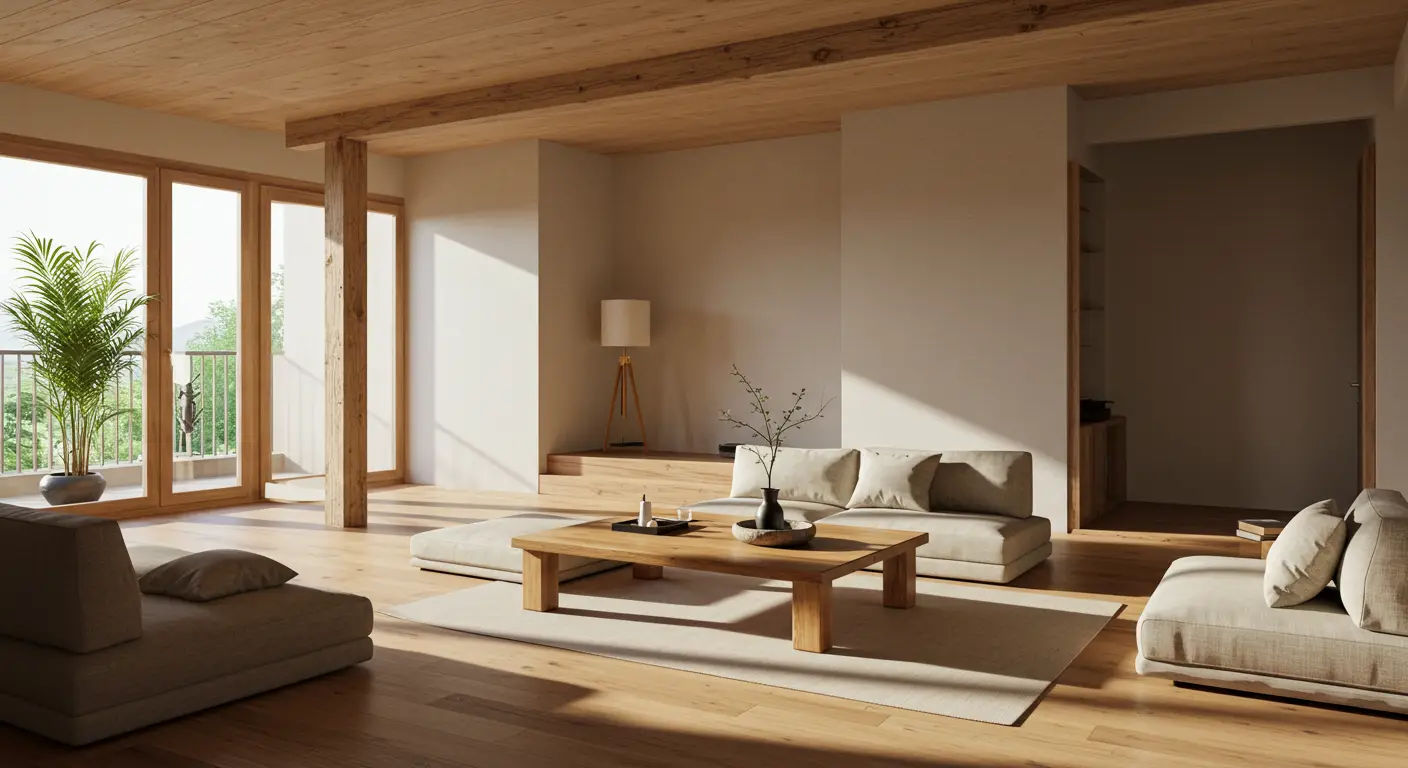
Zen interiors prize clarity. Think light wood, stone, and empty surfaces that invite a sigh of relief rather than a rummage for misplaced bills. The real luxury isn’t the materials, but the absence of mental static.
Inspection question: Could this room feel complete with less, or does it demand layers of décor to distract from awkward proportions?
Feng Shui: Flow as Psychology
Strip away the mysticism and Feng Shui boils down to a practical preoccupation: how people move, breathe, and see within a space. Clear pathways, balanced light, a sense of openness rather than blockage.
You don’t have to believe in qi to recognise that awkward furniture placement makes daily life irritating, or that a dark corner can sap mood.
Inspection question: Does this home let you move naturally, or do you bump into edges, detours, and dead ends?
Wabi-Sabi: Imperfection as Comfort
Where Zen pares back and Feng Shui arranges, Wabi-Sabi shrugs and says: let it be. The crack in the timber, the patina on the brass, the slightly uneven wall that holds more history than a flawless render ever will.
Research suggests people often bond more deeply with objects and spaces that carry marks of time. A pristine developer’s apartment may photograph well, but it rarely feels lived-in until life itself leaves its scuffs.
Inspection question: Does this place feel genuine, or does it look like it was staged for a catalogue and forgotten about afterwards?
Bringing It Back Home
The danger is in treating these traditions like lifestyle décor — plonking a bamboo plant in the corner and calling it Zen. Their value isn’t imitation, but perspective. They remind us to ask different questions of a home:
- Could simplicity ease mental load?
- Does flow make life easier, not harder?
- Does authenticity matter more than perfection?
The Real Prize
The payoff of borrowing from these philosophies isn’t a Japanese tea garden in the suburbs. It’s the everyday relief of living in a home that works with your psychology, not against it.
For Robert, it was the difference between an apartment that ticked boxes and one that allowed him to exhale. For the rest of us, it’s a reminder that while square footage and postcode may drive the search, what makes us stay is often subtler: harmony, flow, and the comfort of knowing imperfection is not failure but life itself.