
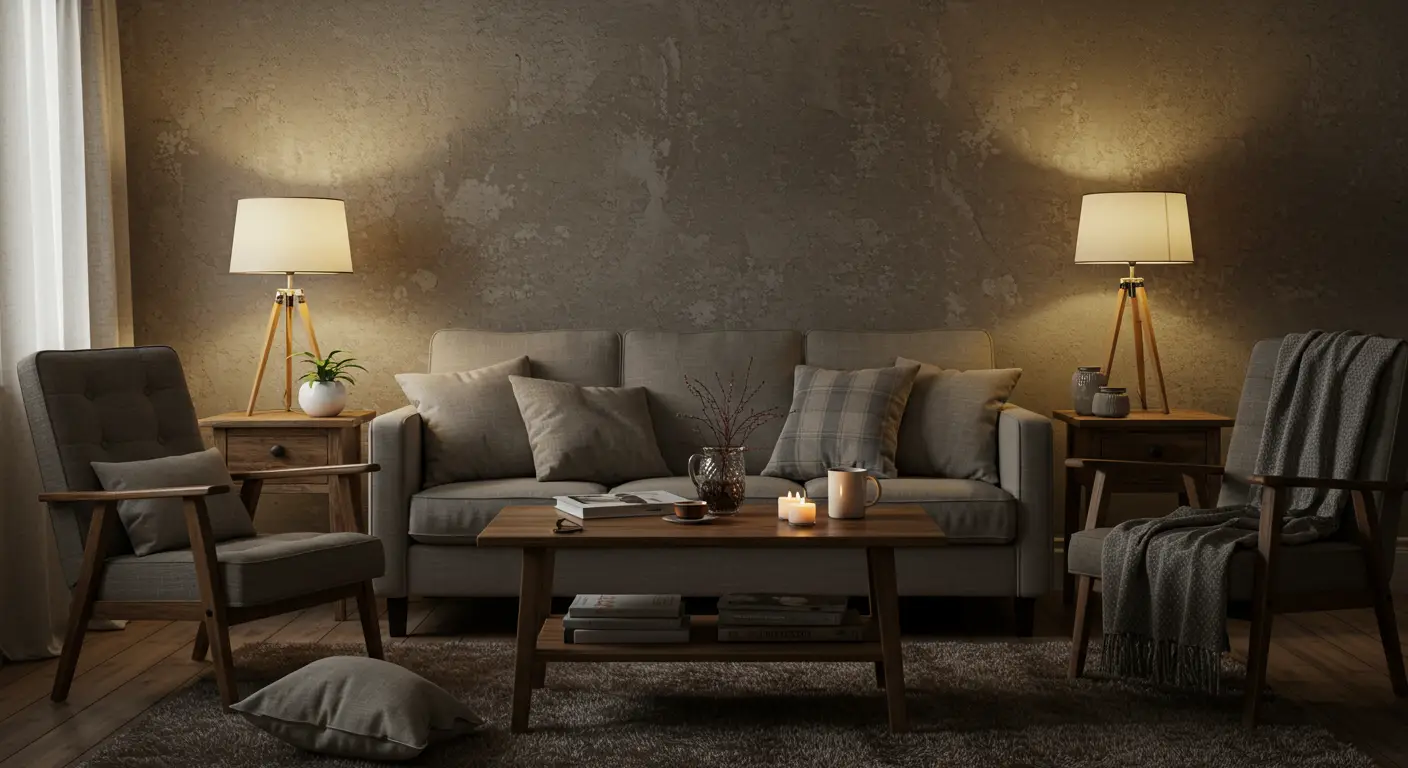
The Feeling One Cannot Quite Name
Three months after moving in, Claire realised she hadn’t hosted a single guest. The apartment ticked all the sensible boxes — modern finishes, good location, decent size — but it felt more like a serviced flat than a sanctuary.
By contrast, her old family home had peeling paint and a sofa that had seen better days, but neighbours never wanted to leave. Mismatched lamps, slightly wobbly dining chairs, yet a warmth that somehow held people there.
Claire’s dilemma is familiar: a home that looks correct but doesn’t feel it. The Danes, naturally, have a word for this: hygge. A mash-up of comfort, connection and belonging, it’s become shorthand for that elusive quality of feeling truly at ease in a space.
What the Science Knows (and What It Doesn’t)
Environmental psychology has poked at comfort for decades, and while no lab has yet invented a hygge-meter, some patterns hold up:
- Lighting. Warm, layered light encourages relaxation. Cold overhead glare does the opposite.
- Texture. Natural surfaces invite touch and subtly raise satisfaction levels. Nobody ever sighed happily stroking high-gloss laminate.
- Social layouts. Sofas angled for conversation invite people to linger. Rows of chairs facing a giant TV do not.
- Rituals. Homes that make space for daily rituals — morning coffee at a window, evening reading in a chair — are consistently rated as more satisfying.
The catch? Comfort is personal. One person’s “cosy” is another’s “claustrophobic.” The only universal is that sterile perfection rarely makes anyone feel at home.
The Trouble with New Homes
Here’s the irony: the very features that sell properties — sleek stone benches, glossy cabinetry, uniform lighting — can strip out character. Buyers walk in expecting hotel luxury and wonder why, three months later, the space feels sterile.
It isn’t a lack of money or finishes. It’s a lack of friction. Hygge thrives on imperfection: the scuffed armchair, the candle that drips unevenly, the lamp you drag from room to room.
The challenge isn’t finding a space that looks polished. It’s finding one you can bend, layer, and soften into something recognisably yours.
How to Spot Hygge Potential (Without Needing Fairy Lights)
Forget Instagram clichés. The practical question at an inspection is: will this place allow me to live comfortably, with other humans, through all four seasons without losing my mind?
Ask yourself:
- Where would you naturally flop with a book?
- Is there a corner that could glow softly at night, rather than one giant glare overhead?
- Do the materials invite touch, or do they scream “wipe me immediately”?
- Could you imagine friends drifting in and not wanting to leave?
If the answer to all of these is “not really,” you may have a design problem no amount of scatter cushions will fix.
The Long Game
Unlike square metres or postcode, hygge takes time. It isn’t delivered by removalists on moving day. It’s grown in layers: the throw that gets softer each winter, the chair that quietly becomes the chair, the ritual of Friday night pasta in the same corner of the kitchen.
The payoff? A home that works harder than it looks. Not the show pony for real-estate brochures, but the workhorse that restores mood, steadies nerves, and makes company feel natural rather than staged.
Closing Note
The Danes may have bottled the brand, but the principle is global: homes should feel lived-in, not showroomed. Hygge is not a design trend to be installed; it’s a measure of whether a space genuinely supports human life — with all its rituals, seasons, and imperfections.
And if you’re still wondering whether your new place has it? Invite a friend over, make tea, and notice how long they stay. That’s the real litmus test.