
The Space That Speaks Before Words
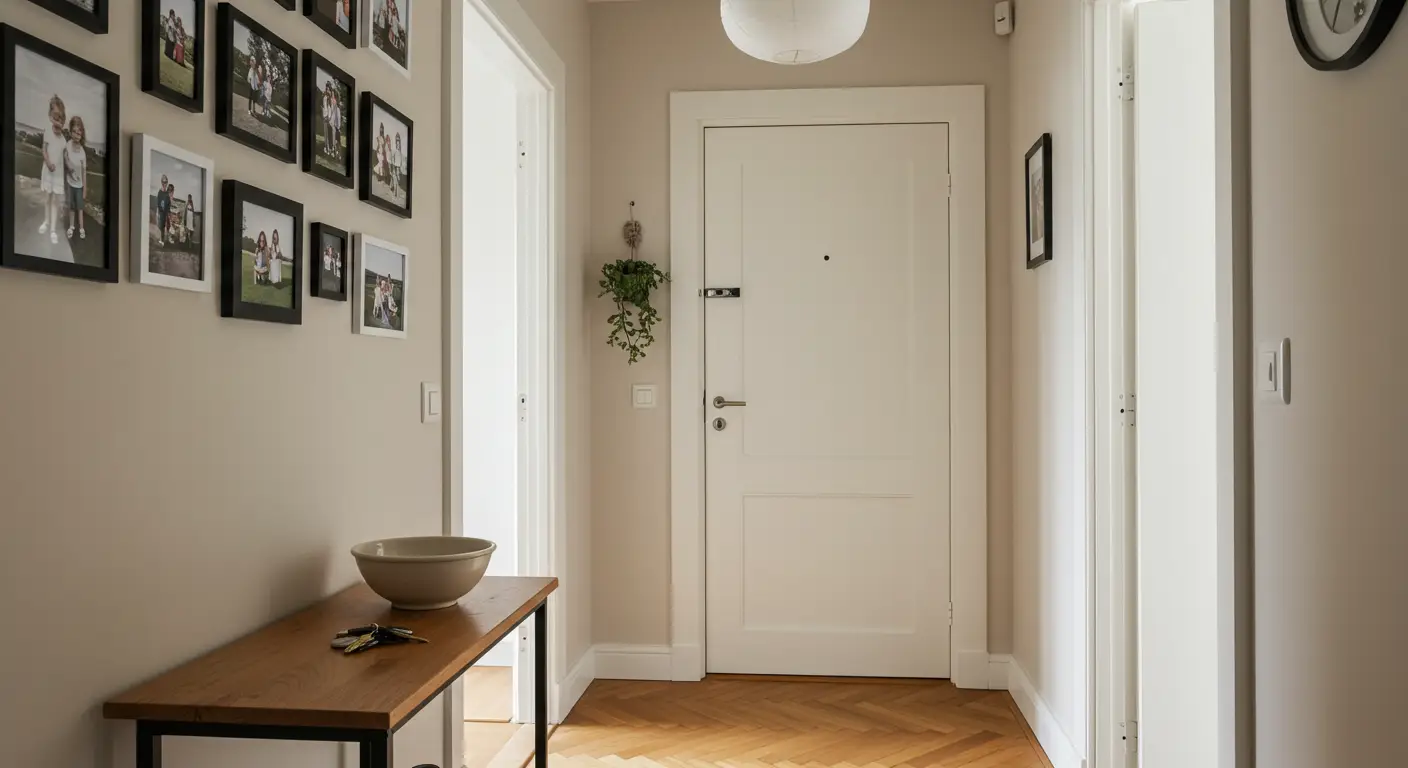
When Sarah’s daughter first visited her new apartment, she stopped just inside the doorway and smiled: “Mum, this is so…you.” She clocked the gallery wall of family photos, the ceramic bowl for keys, the dappled light falling across the narrow hall.
It was the kind of throwaway remark that cuts deeper than any real estate listing. After months of spreadsheets, square-metre comparisons, and postcode agonising, Sarah realised she’d landed somewhere that mirrored her identity — and it started with the entry.
We all know the cliché: first impressions form in seconds. But in homes, those seven seconds happen not in the living room or the kitchen, but right at the door. Entryways are the seven-second decision-makers. Buyers often rush through them at inspections, yet these threshold spaces quietly dictate how a property feels.
Part 1: Inspection-Day Exercises
Think of the entryway as a psychological airlock: the place that determines whether you exhale or tense up the moment you step inside. Environmental psychology gives us some simple lenses to check during inspections.
A Sensory Checklist for Entryways
- Light. How does natural or artificial light fall as you step in? Is it warm and inviting or flat and shadowed? Does it feel like a welcome or a warning?
- Air. Is there a sense of freshness on arrival, or does the space feel stale, draughty, or oddly stuffy?
- Sound. Close the door and listen for thirty seconds. Does the noise of the street fall away, or does it follow you inside?
- Touch + Feel. How does the flooring respond underfoot — solid and grounding, or hollow and echoey? Is there space to move bags, coats, or shoes without bottlenecking?
- Flow. Does the transition into the living areas feel intuitive and smooth, or cramped and awkward?
Questions to Ask on Inspection Day
- Does the entryway buffer the outside world, or is the front door practically in the living room?
- Is there space for personalisation (artwork, photos, meaningful objects) or will clutter become the default décor?
- How do guests experience it — is it a moment of welcome, or an apology waiting to be made?
- Can the threshold handle daily realities like groceries, prams, umbrellas, or wheelie bags?
- Most importantly: how do you feel after standing there for two minutes — relaxed, uplifted, or vaguely unsettled?
Part 2: The Prize (Post-Purchase Payoff)
Why this matters: the entryway is not just a corridor. It’s a daily ritual space. Every arrival, every departure, every hello and goodbye filters through it. Over months and years, that repetition imprints mood and memory.
What a Good Entryway Delivers:
- Identity. Even the smallest threshold has room to say “this is who lives here.” A shelf with chosen objects or a carefully placed artwork can reinforce identity every single day.
- Transition. Well-designed entries allow a mental shift — from noise to quiet, from public to private. They help the nervous system decompress on arrival.
- Comfort. Solid flooring, storage that swallows the daily clutter, and consistent light create a sense of order. Small details add up to lasting calm.
- Memory. First encounters anchor how a home is remembered. That positive “walk-in moment” lingers long after people leave.
Long-Term Considerations:
What looks like “just a hallway” at inspection becomes the most repeated experience of the home. If it jars — dark, draughty, cramped — the irritation compounds. If it comforts — light, airy, quietly personal — the effect is exponential.
This is the payoff: not grandeur, not drama, but consistency. An entryway that quietly reassures every single time you cross it.
Closing Thought
We like to think homes win us over with sprawling kitchens or sunset balconies. In reality, the deal is often sealed (or soured) within those first seven seconds. Entryways are the silent mood-setters — not glamorous, but powerful.
Ignore them, and you inherit a daily irritant. Notice them, and you give yourself the subtle gift of arriving home to calm, identity, and welcome — day after day, year after year.